
Choosing the right orthodontist payment plan in 2026 can save you from stress, confusion, and surprise costs. Many people start with one simple thought: “I need braces, but I cannot pay the full amount today.” That feeling is normal. Braces, clear aligners, retainers, scans, and follow-up visits can create a big bill. However, the right payment setup can make treatment easier to manage.
Imagine a parent taking their child for a braces consultation. The orthodontist explains the treatment clearly. The smile problem can improve, and the result feels exciting. Then the office shows three payment choices. One plan has a low monthly payment. Another plan has a higher down payment. A third option works with insurance, but the final cost still feels unclear. At that moment, the family does not need pressure. They need a simple way to compare every option.
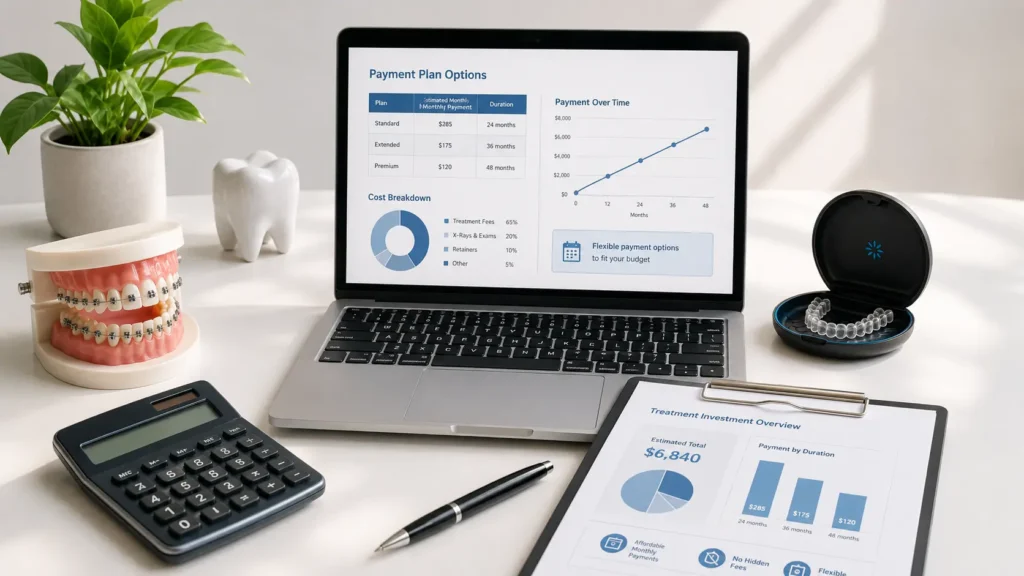
That is why this guide matters. A good orthodontist payment plan should fit your real budget, your insurance coverage, and your treatment timeline. Also, it should explain the full cost before you start. In this article, you will learn how to choose wisely, compare plans, avoid hidden fees, and protect your money while starting orthodontic care.
Why an Orthodontist Payment Plan Matters
An orthodontist payment plan matters because orthodontic care often costs more than a regular dental visit. You may need braces for several months or even a few years. Because of that, the payment decision stays with you for a long time.
Many people search for braces near me payment plan, braces in payments near me, or payment plans for braces near me because they want treatment without paying everything upfront. This makes sense. However, a low monthly amount does not always mean a better deal.
For example, one office may offer a smaller monthly payment but stretch the balance over a longer period. Another office may ask for more each month but include retainers, follow-up visits, and emergency care. Therefore, you should compare the full plan, not just the first number you see.
A smart payment plan helps you begin treatment with confidence. More importantly, it helps you finish treatment without damaging your monthly budget.
Check the Full Braces Cost First
Before you choose any orthodontist payment plan, ask for the full treatment cost. This is the most important number.
Some offices highlight monthly orthodontic payments because they look easier. However, the total cost tells the real story. A plan that says “only $99 per month” may still cost more if it includes interest, extra fees, or a longer payment period.
Ask the office to explain the full price in writing. The quote should include exams, X-rays, scans, braces or aligners, adjustment visits, retainers, and follow-up care. Also, ask whether broken brackets, lost aligners, or emergency visits cost extra.
Once you know the full amount, you can compare plans properly. Without this number, you may choose a plan that looks cheap but becomes expensive later.
What the Payment Plan Includes
A good orthodontist payment plan should feel clear from the beginning. You should not need to guess what the plan covers.
The agreement should show your down payment, monthly payment, number of months, total balance, due date, and late fee rule. It should also explain what happens if treatment takes longer than expected.
In addition, the plan should explain retainers. Many people forget about retainers until treatment ends. However, retainers protect the result after braces come off. If the plan does not include them, you may face another bill later.
A strong plan should also explain insurance. If your dental insurance covers part of the cost, the office should show how that benefit affects your remaining balance. As a result, you can see what you truly need to pay.
Choose the Right Down Payment
The down payment can change your whole payment experience. A higher down payment usually lowers your monthly orthodontic payments. Meanwhile, a smaller down payment helps you start treatment sooner.
For example, if treatment costs $5,000 and you pay $1,000 upfront, your remaining balance becomes $4,000. Therefore, your monthly payment may feel lighter. However, if that $1,000 empties your savings, the plan may still hurt your budget.
On the other hand, a very small down payment may create a higher monthly bill. So, you need balance. Choose a down payment that helps your monthly budget without removing your emergency money.
A good orthodontist payment plan should give you options. If the office offers only one fixed structure, ask whether they can adjust the down payment and monthly amount.
Set Monthly Payments You Can Afford
Monthly orthodontic payments should fit your real life, not your best month. Before you sign, look at your normal income and expenses.
Start with your monthly income. Then subtract rent, food, transport, school fees, insurance, loan payments, phone bills, and savings. After that, check how much money remains. If the braces payment fits only when nothing goes wrong, the plan may be too tight.
Also, ask about the payment date. If your salary comes on the 5th, a payment due on the 1st may create stress. However, a due date after salary can make the same amount easier to handle.
This small detail matters. A good orthodontist payment plan should work with your cash flow, not against it.
Use Insurance With Your Payment Plan
Insurance can reduce the cost, but it may not cover everything. So, you should check your benefits before choosing an orthodontist payment plan.
Some dental plans include orthodontic coverage. Others cover only children. Some plans cover adults, but only up to a lifetime limit. Also, many plans have waiting periods, provider networks, and coverage rules.
If you want the best orthodontic insurance plan, compare more than the monthly premium. Look at the orthodontic coverage amount, waiting period, deductible, lifetime maximum, and in-network orthodontists.
Affordable orthodontic insurance plans can help, but only when the benefits match your treatment needs. A cheap insurance plan may not help much if it excludes braces or has a long waiting period.
Before treatment starts, ask the orthodontic office to estimate your insurance benefit. Then ask your insurance company to confirm it. After that, compare the remaining balance with your payment plan.
Find the Best Orthodontic Insurance Plan
The best orthodontic insurance plan is the one that gives real support for your treatment. It is not always the plan with the lowest monthly price.
A strong plan should clearly show orthodontic benefits, waiting periods, coverage limits, and age rules. Some plans cover children but not adults. Other plans may cover both, but only up to a lifetime maximum.
So, always read the details before you buy or use a plan. If you already have dental insurance, call the insurance company and ask about braces coverage. Also, ask whether your orthodontist is in-network.
The right insurance can make your orthodontist payment plan easier. However, weak insurance can create confusion if you expect more coverage than it actually gives.
Search Local Payment Plan Options
Many people search for orthodontist that accept payment plans near me, orthodontist that take payment plans near me, or orthodontist that offer payment plans. These searches can help you find local offices. However, they do not always show the best financial choice.
A nearby office may offer monthly payments, but the total price may be higher. Another clinic may sit a little farther away, yet it may offer better terms, clearer pricing, and stronger insurance support.
So, use local search as your starting point. Then compare each office carefully. Read reviews, check the website, and call the office. Ask whether they offer monthly payment plans, accept your insurance, and provide written estimates.
Searches like orthodontist that do payment plans and orthodontist that takes payments should lead you to a real conversation. The office should explain the details clearly before you book treatment.
Check Cheap Braces Payment Plans Carefully
A cheap braces payment plan can sound attractive. However, cheap should mean affordable, not incomplete.
Before you choose a cheap braces payment plan near me, ask what the price includes. Does it include retainers? Does it include follow-up visits? Does it include emergency repairs? Does it include all adjustment appointments?
If the plan removes important services to lower the price, it may not save money. Instead, it may create extra bills later.
Also, compare the provider’s experience. Orthodontic treatment moves teeth and changes your bite. Because of that, quality matters. A low price should not come with poor communication or unclear care.
A good orthodontist payment plan gives you both affordability and trust.
In-House Plan vs Financing
Orthodontic offices may offer different payment setups. Some use in-house plans. Others work with third-party financing companies.
An in-house plan means you pay the orthodontist directly. This often feels simple because the same office handles treatment and payments. Many patients like this option because it keeps communication easy.
Third-party financing works differently. A finance company pays the clinic, and you repay that company. This option may give you more time to pay. However, it may also include interest, credit checks, late fees, or promotional rules.
Therefore, read every term before you agree. If a plan says “no interest,” ask what happens if you miss a payment or fail to pay on time. A safe orthodontist payment plan should not surprise you later.
Red Flags in Payment Plans
Some payment plans look good at first but feel unclear when you read the details. Therefore, watch for red flags before you sign.
Be careful if the office talks only about monthly payments and avoids the total cost. Also, slow down if the staff pushes you to sign on the same day. Orthodontic care is a long decision, so you deserve time to review the agreement.
Another warning sign is unclear insurance language. If the office cannot explain your estimated insurance benefit, ask for more details. Also, avoid any plan that hides late fees, interest, or cancellation rules.
A good orthodontist payment plan should feel simple, written, and honest.
Pick the Best Plan for Your Budget
The right plan should match your income, savings, and comfort level. It should not force you to cut important bills.
First, decide how much you can pay each month without stress. Next, choose a down payment that protects your emergency fund. After that, compare the total cost and included services.
If two plans look similar, choose the one with clearer terms. Clear communication often matters more than a tiny price difference.
Also, think about the treatment timeline. If payments continue after treatment ends, make sure you feel comfortable with that. A longer plan can lower your monthly cost, but it also keeps the balance active for more time.
In the end, the best orthodontist payment plan is the one you can complete without fear.
Final Checklist Before Treatment
Before treatment begins, review the full agreement one more time.
You should know your total cost, down payment, monthly payment, payment length, due date, insurance estimate, retainer cost, emergency visit rules, and late fee policy.
Also, keep a copy of every document. Save your insurance estimate, payment agreement, receipts, and emails. These records can help if questions come up later.
If anything feels unclear, ask before treatment starts. Once you sign, the agreement becomes harder to change.
Build Better Money Habits Before Braces
An orthodontist payment plan becomes easier when your money habits are clear. Before you start braces, check your monthly income, savings, and regular bills. If you are still learning how to manage credit and payments, you can read this helpful guide on how to build credit at 18.
Good credit habits can help you understand payment responsibility. They also make it easier to compare financing offers without feeling confused. If your budget feels tight, you can also read Finovixa guide on advanced financial security.
Check Trusted Orthodontic Sources
Before choosing an orthodontist payment plan, check trusted sources so you understand the real cost, insurance rules, and payment options. The American Association of Orthodontists explains that many orthodontists offer multiple payment options, and some patients may also use third-party financing to manage treatment costs.
You should also review your dental insurance before you start braces. Cigna’s guide on orthodontic insurance coverage explains that plans may include waiting periods, exclusions, coverage limits, and lifetime maximums. Because of this, always confirm your braces benefit before signing any payment agreement.
For tax-related questions, review IRS Publication 502 on medical and dental expenses. It explains how medical and dental expenses work for tax purposes. However, always confirm your personal case with a tax professional before making a final decision.
Conclusion
Choosing the right orthodontist payment plan in 2026 is about more than finding the lowest monthly price. It is about understanding the full cost, checking insurance, comparing payment terms, and choosing a plan that fits your real budget.
Searches like braces near me payment plan, braces in payments near me, orthodontist monthly payment, and payment plans for braces near me can help you find local options. However, the final choice should come from clear numbers, written terms, and trust in the provider.
A good plan should explain the total cost, monthly orthodontic payments, down payment, insurance benefit, retainers, and extra fees. Also, it should give you enough breathing room every month.
Do not rush because of a low advertised price. Instead, compare the full value. The right orthodontist payment plan will help you improve your smile while keeping your financial life stable.