
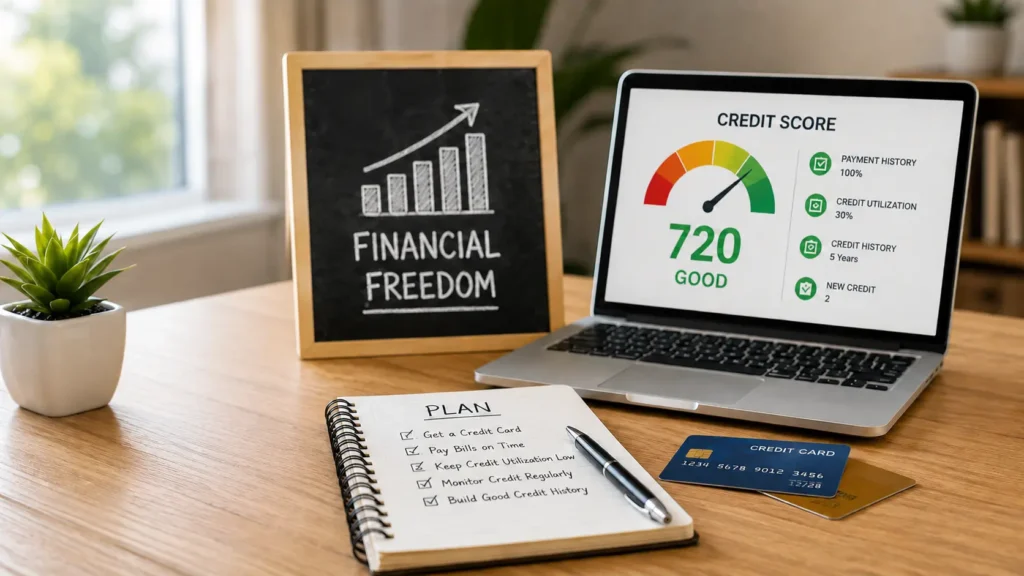
Learning how to build credit at 18 can give you a strong money advantage early in life. When you turn 18, you become old enough to apply for many financial products in your own name. However, most 18-year-olds have one common problem. They have no credit history yet.
Because of that, lenders may not know if you can handle monthly payments. So, even if you are responsible with money, your credit file may still look empty. This is why many young adults ask, “I just turned 18, how do I build my credit?” The answer is simple. You need to start small, pay on time, and build trust slowly.
The good news is that you do not need a big salary to start. You also do not need an expensive credit card. In fact, the safest way to build credit at 18 is to use simple methods that report your payment activity to the credit bureaus. Over time, those small actions can help you get a credit score, improve your credit history, and qualify for better financial options.
This article explains how to build credit at 18 in normal, easy words. You will learn how to start building credit at 18 with no credit, how to build credit at 18 without a credit card, how to build credit at 18 with no job, and how to get a good credit score at 18 without falling into debt.
What It Really Means to Build Credit at 18
Before you learn how to build credit at 18, you need to understand what credit means. Credit is your financial reputation. It shows how you handle borrowed money, monthly payments, credit cards, and loans.
A credit report is like a record book. It shows your accounts, payment history, balances, and credit activity. A credit score is a number created from that credit report. So, if your credit report has no activity, you may not have a score yet.
Many young people think they automatically get a credit score when they turn 18. That is not always true. Usually, you need at least one account that reports to the credit bureaus. After some payment history appears, your credit score can begin.
So, when people ask how to get a credit score at 18, the real answer is this: open or join a credit account that reports your activity, then manage it well every month.
Why Learning How to Build Credit at 18 Matters
Knowing how to build credit at 18 matters because credit affects many future decisions. A good credit history can help when you apply for a credit card, car loan, apartment, phone plan, or personal loan.
Better credit can also help you save money. For example, lenders often give lower interest rates to people with strong credit. As a result, you may pay less over time. On the other hand, weak credit can make borrowing harder and more expensive.
Starting early gives you time. Since credit history length matters, an account opened at 18 can become valuable later. If you manage it well for years, it can support your future financial life.
At the same time, credit teaches discipline. You learn due dates, spending limits, interest, balances, and monthly payments. These habits are useful even outside credit cards.
How to Build Credit at 18 With No Credit History
The most common question is how to build credit at 18 with no credit. If you have no credit history, lenders have no past record to judge you. Because of that, you need beginner-friendly credit options.
The best starting options are:
- A secured credit card
- Authorized user status on a trusted account
- A student credit card
- A credit-builder loan
- Rent payment reporting
Each method can help you start credit at 18, but only if the account reports to the credit bureaus. Reporting matters because your credit score grows from reported activity.
For most beginners, a secured credit card is one of the easiest methods. However, if you do not have income yet, becoming an authorized user may be a better starting point.
How to Start Building Credit at 18 With a Secured Credit Card
A secured credit card is one of the best ways to learn how to start building credit at 18. It works like a normal credit card, but you give a refundable deposit first.
For example, you may deposit $200. Then, your card limit may also be $200. This deposit protects the card company. Because of that, secured cards are often easier to get when you have no credit history.
Use the card for small purchases only. A phone bill, fuel, or a small grocery purchase is enough. After that, pay the full balance before the due date.
This method works because it creates a record of responsible use. Month after month, your credit report can show that you pay on time and keep your balance low.
Before applying, check three things:
- The card reports to all three major credit bureaus
- The fees are low
- The card has a clear path to upgrade later
A secured card can help if you want to build credit fast at 18. However, fast does not mean instant. It means you start the right way and avoid bad mistakes.
How to Build Credit at 18 as an Authorized User
Another smart way to build credit at 18 is by becoming an authorized user. This means someone adds you to their credit card account. Usually, this person is a parent, guardian, or trusted family member.
If the card issuer reports authorized user activity, the account may appear on your credit report. When the main cardholder pays on time and keeps the balance low, it can help your credit history.
This method is useful if you are wondering how to build credit at 18 with no job. Since you are not the main account holder, you may not need your own income to benefit.
However, you must choose the right person. If the main cardholder misses payments or uses too much of the credit limit, your credit can be hurt too. So, only become an authorized user on a clean, well-managed account.
You do not even need to use the card. In many cases, the main cardholder can keep the card while your name stays on the account. That makes this method safer for beginners.
How to Build Credit at 18 Without a Credit Card
Some young adults want to know how to build credit at 18 without a credit card. This is possible, although credit cards are one of the common ways to start.
A credit-builder loan can help. With this type of loan, the lender usually holds the loan amount in an account while you make monthly payments. After you finish paying, you receive the money, minus any fees or interest.
This helps because your payment activity may be reported to the credit bureaus. So, if you pay on time, you can build credit history.
Rent reporting is another option. If you pay rent, some services can report your rent payments to credit bureaus. This can help you build credit without borrowing money on a card.
Still, compare the costs before using any service. Some services charge monthly fees. If the cost is too high, it may not be worth it.
How to Build Credit at 18 With No Job
Many young people ask, “How can I build my credit at 18 if I have no job?” This is a real concern because lenders usually want to see income before giving you your own credit card.
If you have no job, the safest path may be becoming an authorized user. This can help you start your credit history without opening your own account right away.
You can also focus on money habits first. Open a bank account, track your spending, save some money, and learn how bills work. Later, when you have income from a part-time job, freelance work, or another legal source, you can apply for a secured card or student card.
How to Build Credit Before 18 or Under 18
People often search for how to build credit under 18 or how to build credit before 18. The truth is that minors cannot usually open credit accounts alone. However, they can prepare early.
One common option is becoming an authorized user on a parent’s or guardian’s card. Some card issuers allow this before age 18, but rules can vary.
Even if you cannot open your own credit account yet, you can still build strong habits. You can learn how to budget, save money, track spending, and understand interest. These habits matter because credit can become dangerous when used without discipline.
Parents can also help teenagers understand one simple rule: a credit limit is not extra money. It is borrowed money that must be repaid.
So, if you want to start building credit as a teenager, focus on safe family-supported methods and money education first. Once you turn 18, you can start your own credit journey with more confidence.
How to Build Credit Fast at 18 Without Bad Debt
Many beginners want to know how to build credit fast at 18. That is understandable. However, credit does not grow overnight. It grows through steady and responsible behavior.
The fastest safe way is not to borrow more money. Instead, the fastest safe way is to avoid mistakes.
Pay every bill on time. Keep your balance low. Use only a small part of your credit limit. Avoid opening too many accounts. Check your credit report for errors.
A secured credit card can help you start quickly. An authorized user account can also give you a head start. A credit-builder loan may help if you want a card-free option.
However, do not take a loan just to look active. Debt can become expensive. If you do not need a loan, do not force one.
The goal is not only to build credit fast at 18. The real goal is to build good credit that lasts.
How to Get a Good Credit Score at 18

To get a good credit score at 18, focus on the habits that matter most. Payment history is very important. So, paying on time should be your top priority.
Credit utilization also matters. This means how much of your available credit you use. For example, if your credit limit is $300 and your balance is $30, your utilization is 10%. That looks much better than using $280 out of $300.
Account age matters too. This is why starting early helps. The longer your account stays open in good standing, the more useful it can become over time.
New credit also plays a role. If you apply for too many accounts in a short time, lenders may see you as risky. Because of that, beginners should start with one good account and manage it well.
Credit mix can matter later, but you do not need to worry about it too much at 18. First, build a clean payment history.
How to Start Credit at 18 With a Simple Monthly Routine
A simple routine can make credit building easy. You do not need to check your score every day. Instead, follow a monthly system.
Use your credit card for one planned purchase. Keep the amount small. Pay the full balance before the due date. Then, check your statement to make sure everything looks correct.
This routine helps you build credit at 18 without stress. It also lowers the chance of debt because you are not using the card for random spending.
A good example is using your card for a $10 or $20 monthly bill. Once the charge appears, pay it off. That small habit can build a positive record over time.
Also, keep your bank account ready before the due date. If autopay is turned on but your bank balance is low, the payment may fail. So, always know how much money you have.
How to Build Your Credit at 18 and Avoid Beginner Mistakes
Credit can help you, but it can also hurt you if you use it carelessly. That is why learning how to build your credit at 18 also means learning what not to do.
Do not spend just because you have a credit limit. A $500 limit does not mean you have $500 of free money. It means you can borrow up to that amount and must repay it.
Avoid late payments. Even one late payment can damage your credit. So, use reminders and automatic payments when possible.
Never carry a balance because someone told you it helps your score. You do not need to pay interest to build credit. Paying in full is better.
Do not apply for too many cards at once. More cards do not automatically mean better credit. Good habits matter more than the number of accounts.
Also, do not let friends use your card. If they do not pay you back, you are still responsible for the bill.
How to Build Credit at 18 Using Low Credit Utilization
Low credit utilization can help your score look healthier. In simple words, it means using only a small part of your available credit.
Suppose your card limit is $500. If your balance is $50, you are using 10% of your limit. That is usually better than using $400.
You can keep utilization low by spending less, paying early, or making more than one payment during the month. This is helpful when your first credit limit is small.
However, do not overthink it too much. The main goal is to avoid high balances. A small purchase and full payment every month is enough for most beginners.
This is one of the easiest ways to improve credit score at 18 because it does not require extra income or extra accounts.
How to Get Credit at 18 If You Get Denied
Getting denied for your first credit card can feel bad, but it is not the end. Many 18-year-olds get denied because they have no credit history, low income, or limited information on their file.
If this happens, read the denial notice. It usually explains the reason. Then, choose a better starting method.
A secured credit card may work if a regular card does not. Authorized user status may help if you have no income. A credit-builder loan may be another option.
Do not apply again and again in the same week. Too many applications can create hard inquiries. Instead, wait, improve your situation, and apply for something that fits your profile.
Building credit is a long game. A denial today does not mean you cannot build strong credit later.
How to Build Credit History at 18 With On-Time Payments
Payment history is one of the strongest parts of your credit profile. Because of that, on-time payments should become your main habit from day one.
A payment is not only about avoiding fees. It also shows lenders that you are reliable. When you pay on time every month, your credit report starts building trust.
Set reminders on your phone. Mark the due date on your calendar. Turn on autopay if you are comfortable. Also, try to pay early whenever possible.
If you ever cannot pay the full balance, at least pay the minimum before the due date. However, try not to make this a habit. Paying only the minimum can lead to interest and long-term debt.
The strongest approach is simple: spend only what you can pay back fully.
How Long Does It Take to Build Credit at 18?
Many people ask how long it takes to build credit at 18. The answer depends on your starting point and your account activity.
If you have no credit file, it may take a few months of reported activity before a score appears. After that, your score can improve as you keep making payments and managing balances well.
In the first year, your main goal is not perfection. Your goal is clean history. A simple account with on-time payments can become a strong base.
After six to twelve months, you may have more options. Some secured card issuers may review your account for an upgrade. Some lenders may also see you as less risky.
Learn Credit Basics from Trusted Financial Sources
When you are learning how to build credit at 18, it is always better to understand the basics from trusted financial sources. Credit can affect future loans, apartment approvals, interest rates, and even some service applications. Therefore, before opening your first credit account, take time to learn how credit reports and credit scores work. You can read simple credit guidance from USA.gov.
You should also check your credit report regularly once your credit history starts. This helps you find mistakes, wrong account details, or signs of identity theft early. The safest official place to check free credit reports is Federal Trade Commission.
These trusted sources are useful because they help beginners understand credit in a simple and safe way. As a result, you can build credit at 18 with more confidence and avoid common mistakes that many young adults make in the beginning.
Why Building Credit Is Only One Part of Financial Security
Building credit at 18 is a smart financial move. However, a good credit score alone does not create long-term financial stability. At the same time, you should focus on protecting your money, creating emergency savings, and developing strong financial habits. As your credit profile grows, your overall financial foundation should grow as well. That is why understanding advanced financial security becomes important. A strong credit history can help you qualify for better financial opportunities, while proper financial protection can help you avoid setbacks when unexpected expenses appear. If you want to learn how credit fits into a bigger wealth-building strategy, read our guide on Advanced Financial Security.
Build Credit Faster by Creating Additional Income
Although responsible credit use helps build your score, having a steady income makes the process much easier. When you earn extra money, you can pay bills on time, avoid debt, and maintain lower credit card balances. As a result, your credit profile can improve naturally over time. Many young adults start side hustles to strengthen their finances while building credit. One of the most beginner-friendly options is freelance writing because it requires minimal investment and can be started from home. If you want to increase your income while working toward better financial health, check out our detailed guide on the Freelance Writing Side Hustle.
Conclusion
Learning how to build credit at 18 is one of the smartest money moves you can make early in life. A strong credit history can help you later when you apply for a credit card, car loan, apartment, or other financial product. More importantly, it teaches you how to manage money with discipline.
You do not need to rush. You only need to start the right way. A secured credit card, authorized user account, student card, credit-builder loan, or rent reporting service can help you start building credit at 18 with no credit history. After that, your job is to pay on time, keep balances low, and avoid unnecessary debt.
Good credit does not come from tricks. It comes from small, smart actions repeated every month. So, if you just turned 18 and are wondering how to get credit started, begin with one safe method and stay consistent.