

Buying a vehicle is not only about choosing the car you like. It is also about choosing the right payment plan. Many buyers get excited when a dealer says approval is easy, especially when the dealership offers in house financing. At first, it feels simple. You choose the car, fill out the application, make the down payment, and drive away.
However, the real cost starts after that.
In house financing can help people who have bad credit, no credit history, or a hard time getting approved by a bank. It can also help someone who needs a car quickly for work, family, business, or daily travel. Still, easy approval can become expensive when the buyer does not understand the full loan.
That is why this article matters. Before you buy from a car dealership with in house financing, you should know how the loan works, what questions to ask, and what mistakes to avoid. A vehicle should make your life easier. It should not create years of payment stress.
This guide uses simple language and real-life thinking. By the end, you will understand how to compare in house auto financing, how to check dealer terms, and how to protect your money before signing the contract.
What In House Financing Really Means
In house financing means the dealership helps finance the vehicle directly. Instead of going to a bank first, you apply for financing at the same place where you choose the vehicle. The dealer may finance the loan itself, or it may work with a finance company connected to the dealership.
Many buyers search for a dealer in house financing option when banks are not helping them. The process feels easier because the car and the loan come from one place. For someone with weak credit, that can feel like a relief.
However, easy approval should not be confused with a low-cost deal. A dealer can approve you and still charge a high interest rate. The same dealer can offer a low monthly payment and still make the total loan expensive. Therefore, the first rule is simple: do not judge the deal only by the approval.
A good financing plan should show the full cost clearly. The vehicle price, down payment, interest rate, loan length, total payment amount, late fees, and warranty details should all be clear before you sign.
Why Buyers Choose In House Auto Financing
Many buyers choose in house auto financing because the process feels faster than traditional lending. If a bank rejects your application, a dealership may still say yes. When your credit score is low, the dealer may look at your income and down payment instead of only looking at your credit report.
This is one reason bad credit buyers often look for auto dealers with in house financing. They want a chance to buy a vehicle when other lenders are not ready to help.
Some buyers also prefer this option because they do not want to visit multiple banks. The dealer handles the vehicle and the financing in one place. That feels convenient. Still, convenience should not replace careful checking.
When you finance through a dealer, you still need to compare the offer. The payment should fit your real budget, not just the dealer’s approval number. A payment may look affordable on paper, but once insurance, fuel, repairs, registration, and emergency expenses are added, the real monthly cost can feel much higher.
How The Process Usually Works
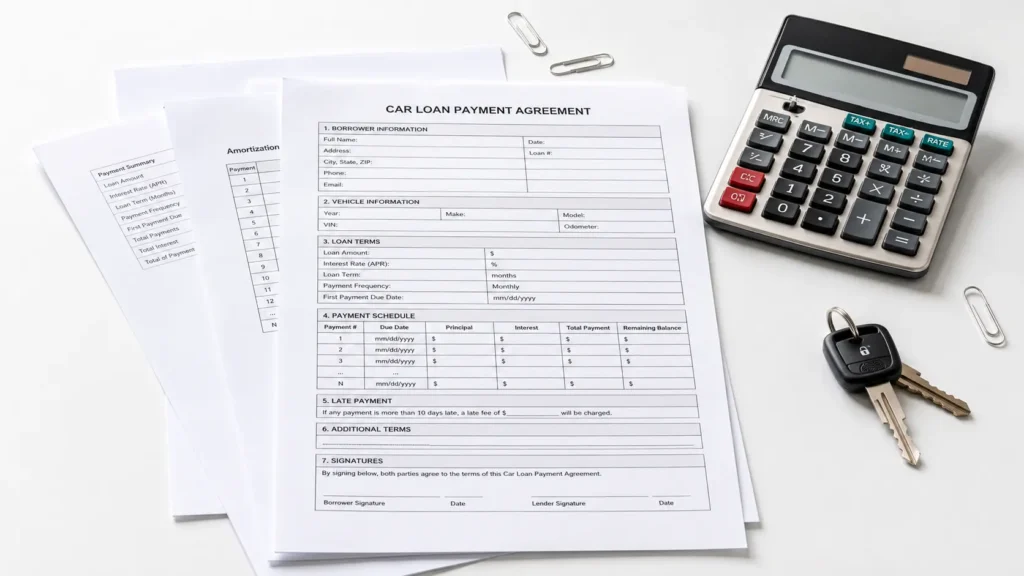
The process normally starts when you select a vehicle. After that, the dealer asks for your personal and financial details. Proof of income, proof of address, identification, bank statements, job details, and sometimes references may be required.
Some dealerships check your credit report. Others advertise no credit check in house financing. Even when a dealer says no credit check, it may still review your income, job stability, down payment, and ability to pay.
After that, the dealer gives you the financing terms. This is the point where you must slow down. Do not sign only because the dealer says the car is ready. Read the numbers carefully.
You need to know the actual vehicle price. The amount financed after the down payment also matters. Then, check the interest rate, loan term, total interest, total cost, and all extra fees. If the dealer adds a warranty, service contract, protection package, GPS fee, or document fee, ask how much each item costs.
A clear dealer will explain everything. A risky dealer may only talk about the monthly payment.
The Biggest Mistake Buyers Make
The biggest mistake is looking only at the monthly payment. This happens all the time. A buyer walks into a dealership, sees a vehicle, and asks, “How much per month?” The dealer gives a number that sounds possible. Then the buyer signs without understanding the total cost.
This is dangerous because a monthly payment can be changed by stretching the loan for a longer time. A longer loan can make the payment look smaller, but it can also increase the total interest you pay.
For example, a $350 monthly payment may look better than a $450 payment. However, if the $350 payment runs for many more months, the total cost may be much higher.
So, instead of asking only about the monthly payment, ask this question: “How much will I pay in total after the loan is complete?”
That one question can save you from a costly mistake.
Why The Interest Rate Matters So Much
Interest is the cost of borrowing money. When you use in house car financing, the dealer or finance company charges interest on the amount you borrow. The higher the interest rate, the more you pay over time.
Many buyers with bad credit accept high interest because they feel they have no choice. Sometimes that may be the only approval available. Even then, comparison is still important.
Before accepting dealer financing, check whether a bank, credit union, or online lender can offer a better rate. Even with imperfect credit, you may still get a better offer than expected.
Reading trusted financial guidance before visiting the dealership can help you understand the numbers more clearly.
Check Your Credit Before Applying
Before you search for in house financing near your area, check your credit report first. Many people think their credit is worse than it really is. Sometimes credit reports have mistakes. A wrong balance, old account, or incorrect late payment can hurt your approval chances.
When an error appears, try to fix it before applying for financing. A cleaner credit report may help you get better terms. It may also help you avoid expensive no credit check financing when you do not really need it.
This step is simple, but many buyers skip it. As a result, they walk into the dealership without knowing their true position.
Bad Credit Does Not Mean You Must Accept A Bad Deal
Bad credit can make car buying harder, but it should not make you careless. Many buyers with bad credit feel embarrassed. Because of that, they accept the first approval they get. This can be costly.
If you are looking for in house car financing because of bad credit, remember that the dealer still wants to sell a vehicle. You still have the right to ask questions. Comparing offers is still your right. Walking away is also your right.
A fair dealer should explain the loan in simple words. The full price and all fees should be shown clearly. No buyer should feel guilty for asking questions.
Bad credit may limit your options, but it does not remove your power as a buyer.
Buy Here Pay Here Financing Explained
Buy here pay here is a common type of dealer financing. In this setup, the same business sells the car and collects the payments. Many used car lots use this model because it allows them to work with buyers who may not qualify at banks.
This can be helpful when someone needs transportation quickly. However, buy here pay here financing can come with higher costs and stricter rules. Certain dealers may require weekly or biweekly payments. Others may have very strict late payment policies. A few may repossess quickly if payments are missed.
Before choosing buy here pay here in house financing, ask how payments work. Ask where you make payments, when late fees start, and whether there is a grace period. Also ask whether the dealer reports your payments to credit bureaus.
If the dealer does not report your payments, the loan may not help your credit even if you pay on time.
No Credit Check Financing Needs Extra Care
No credit check financing sounds attractive, especially when your credit score is low. However, no credit check does not mean no responsibility. You still sign a legal contract. The money still has to be repaid. Late fees can still apply if you do not pay. The vehicle can still be repossessed.
Many buyers see “no credit check” and think the deal is easier. Approval may be easier, but the loan may also cost more. Since the dealer takes more risk, it may charge a higher interest rate or ask for a larger down payment.
Before choosing no credit check in house financing, read the contract slowly. Make sure you understand the payment schedule, total cost, late payment rules, and repossession terms.
A simple approval can help you today, but a bad contract can hurt you tomorrow.
Used Cars With In House Financing
Most in house financing deals happen with used cars. This is because used vehicles are usually cheaper than new vehicles, and local dealerships often create payment plans for buyers who need flexible approval.
Used cars can be a smart choice if the vehicle is reliable and the loan is fair. However, used cars also carry repair risk. A low price does not always mean a good deal. If the engine, transmission, brakes, tires, or electrical system has problems, the vehicle can become expensive very fast.
Before buying from a used car dealership with in house financing, check the vehicle history. Ask for service records. Take a proper test drive. Look for warning lights on the dashboard. Also check whether the air conditioning works. During the drive, listen for strange engine sounds. Notice if the car shakes, pulls to one side, or shifts roughly.
If possible, take the vehicle to an independent mechanic. This may cost a little money, but it can save you from a much bigger repair later.
Understand The Used Car Buyers Guide
If you are buying a used car, the vehicle documents and warranty terms are very important. Many used cars are sold with limited warranty coverage. Others are sold as is, which means the buyer may be responsible for repairs after purchase.
This matters because many buyers believe the dealer will fix problems after the purchase. However, if the car is sold as is, the repair cost may become your responsibility.
Before signing any used car financing contract, read the warranty section carefully. If the dealer promises to repair something, get that promise in writing. A verbal promise is not enough.
New Cars And Brand Financing

Some buyers look for in house financing from well-known brands or brand dealerships. For example, a person may visit a Ford, Honda, Hyundai, Kia, Nissan, Toyota, Audi, Tesla, Mitsubishi, or Suzuki dealership and ask about financing options.
A trusted brand can give confidence, but you still need to check the loan. A new vehicle may have better reliability, but it can also cost more. Insurance may also be higher. Longer loan terms can keep you paying for many years.
Some brand dealerships work with outside lenders. Promotional financing may also be available through finance partners. In other cases, the dealer may help buyers through local financing options.
The important point is simple. Do not assume the brand name makes the financing perfect. Always compare the rate, term, fees, and total cost.
Financing A Truck Through The Dealer
Truck buyers often have different needs. Some need a truck for daily driving. Others need it for work, towing, delivery, construction, farming, or business. Because trucks often cost more than small cars, the financing decision needs extra care.
If you are using in house truck financing, calculate the full monthly cost before signing. Do not only count the loan payment. Add insurance, fuel, tires, maintenance, registration, and repairs.
Trucks can be useful, but they can also become expensive to own. When buying a used truck, check its mileage, service history, towing history, engine condition, and transmission health.
If the truck helps you earn money, look at the numbers like a business decision. Ask whether the truck can produce enough income to cover the payment and still leave profit.
Semi Truck And Commercial Vehicle Financing
In house financing for semi trucks, diesel trucks, equipment, and commercial vehicles is a bigger decision than normal car financing. These vehicles can help you build income, but they also bring higher risk.
A semi truck may cost a lot to repair. A diesel engine problem can be expensive. Tires, insurance, fuel, permits, and maintenance can also take a large part of your income.
Before using dealer financing for a commercial truck, write down your expected monthly income and expenses. Be honest. Do not calculate only your best month. Also calculate a slow month.
If the payment only works when business is perfect, the loan may be risky. A strong business vehicle loan should still make sense when work slows down.
RV And Travel Trailer Financing
Some dealerships also offer financing for RVs and travel trailers. This can look attractive because the monthly payment may seem manageable. However, RV ownership has extra costs that many buyers forget.
You may need insurance, storage, repairs, campsite fees, maintenance, tires, roof care, and winter protection. If the RV has an engine, mechanical repairs also matter.
Before choosing in house financing for an RV or travel trailer, ask whether the purchase is a need or a lifestyle want. There is nothing wrong with buying an RV if your budget is ready. However, it should not weaken your emergency fund or delay important financial goals.
Financing Special Vehicles
Some buyers use dealer financing for vehicles like a Dodge Charger, Dodge Challenger, Jeep Wrangler, Corvette, Harley Davidson, or luxury car. These vehicles can be exciting, but excitement can make people ignore the numbers.
Special vehicles often cost more to insure. Parts may be expensive. Fuel costs may be higher. Repairs may also cost more than normal vehicles.
Before financing this type of vehicle, check the full ownership cost. If you already have strong savings and stable income, it may fit your life. However, if you are already stretching your budget, this kind of purchase can create pressure.
A dream vehicle should feel good after you buy it, not only on the day you sign the papers.
Online Dealers And Dealer Financing
Many buyers now compare vehicles online before visiting a dealership. Some online or large dealers may offer financing through their own systems or partner lenders. This can make the process feel faster and cleaner.
Online approval can be convenient, but you still need to read the terms. Check the interest rate, total loan cost, delivery fees, return policy, warranty details, and vehicle history.
Do not let a smooth website make you skip important checks. Whether you buy online or in person, the contract is what matters.
What A Fair Dealer Should Do
A fair dealer should explain the financing in clear language. The dealer should show the vehicle price, down payment, interest rate, loan term, total payment amount, and all extra fees.
The dealer should also allow you to read the contract without pressure. If you want to take the paperwork home and review it, a fair dealer should not make you feel bad.
A fair dealer should answer questions about credit reporting, warranty, late fees, and repossession rules. When the dealer avoids these questions, slow down.
You are not asking too much. This is a financial decision that may affect your budget for years.
Warning Signs To Watch For
Some dealer behavior should make you careful. If the dealer only talks about monthly payment and avoids the total cost, that is a warning sign. Refusing to explain the interest rate is another warning sign.
Be careful if the dealer adds fees at the last minute, rushes you to sign, refuses an independent inspection, or makes promises that are not written in the contract.
A good deal should not need pressure. If the deal is fair today, it should still be fair after you take time to think.
What To Ask Before Signing
Before you sign, ask the dealer to explain the full deal in simple words. Ask for the cash price of the vehicle. Find out how much you are financing after the down payment. Then ask for the interest rate and total cost after all payments.
Also ask whether the loan has a prepayment penalty. This matters because you may want to pay the loan off early later. If the contract charges you for early payoff, that can limit your flexibility.
Ask whether payments are reported to credit bureaus. If your goal is to rebuild credit, this answer is very important.
Finally, ask what happens if you are late. You need to know the grace period, late fee, and repossession policy before you miss a payment, not after.
How To Know If The Payment Fits Your Budget
A car payment should fit your real life, not just your hopes. Before saying yes, look at your monthly income and expenses. Count rent, food, utilities, phone bill, insurance, fuel, debt payments, family needs, and emergency savings.
Then ask yourself whether the car payment still feels comfortable.
Also remember that the payment is not the only cost. A vehicle needs fuel, insurance, maintenance, repairs, registration, and sometimes parking. If the payment uses all your extra money, one repair can create stress.
A safer deal leaves breathing room in your budget.
Why A Down Payment Matters
A down payment reduces the amount you need to borrow. Because of that, it can lower your monthly payment and total interest. It may also help you get approved.
However, you should not give every dollar you have as a down payment. If you empty your savings, you may struggle when the car needs repairs or when an emergency happens.
A balanced down payment is better. Put enough down to reduce the loan, but keep some money for life after the purchase.
This is especially important with used cars because small repairs can appear soon after buying.
Should You Buy An Extended Warranty?
Some dealers offer an extended warranty or service contract with in house financing. This can help if the coverage is strong and the price is fair. However, it can also increase your loan amount.
Before adding a warranty, ask what it covers. Does it cover the engine and transmission? Are electrical issues included? Check whether deductibles apply. Also ask where you can use it, how long it lasts, and which repairs are excluded.
Do not buy a warranty only because the dealer says it adds a small amount to your monthly payment. Ask for the full price. Then decide if it makes sense.
Does In House Financing Help Build Credit?
In house financing can help build credit only if the dealer reports your payments to credit bureaus. This is not automatic.
Some buyers make every payment on time and later discover the loan never appeared on their credit report. That can be frustrating, especially if they chose the loan partly to rebuild credit.
Before signing, ask the dealer directly whether they report payments. Ask which credit bureaus they report to. Also ask whether both positive and negative payment history gets reported.
If the dealer reports on-time payments, the loan may help your credit over time. If the dealer does not report, the loan may still help you get transportation, but it may not improve your credit profile.
When In House Financing Can Be A Good Choice
In house financing can make sense when you need a reliable vehicle, cannot get better approval elsewhere, and fully understand the cost. It can also make sense when the dealer offers clear terms, the vehicle passes inspection, and the payment fits your budget.
For example, someone may use dealer financing to buy a used car for work. If the car is reliable and the payment is manageable, the vehicle can help the buyer earn income and keep life moving.
In that case, in house financing becomes a useful tool. It is not perfect, but it solves a real problem without breaking the budget.
When You Should Avoid In House Financing
You should avoid the deal if the payment is too high, the interest rate is unclear, the vehicle has problems, or the dealer refuses to explain the contract.
You should also walk away if the dealer pressures you to sign before you understand the numbers. Pressure is not a good sign in any financial decision.
If the vehicle is not reliable, even a good loan can become a problem. When the loan is too expensive, even a good car can become a burden. Both the vehicle and the financing need to make sense.
How To Compare Dealer Financing With Other Options
Before accepting dealer financing, try to compare at least one outside option. A bank, credit union, or online lender may give you a better rate. Even if you do not qualify, the comparison gives you useful information.
If the dealer’s offer is much higher than other options, ask why. If the dealer’s offer is the only one available, check whether the payment still fits your budget.
Do not accept a loan only because it is available. Accept it only when the full cost makes sense.
Check Trusted Sources Before Choosing In House Financing
Before you choose in house financing, it is smart to understand how auto loans, credit reports, and used car buying rules work. Trusted sources like the Consumer Financial Protection Bureau, the Federal Trade Commission, and official credit report platforms can help buyers understand loan terms, credit checks, and used vehicle documents more clearly. This is useful because dealer financing can look simple at first, but the real cost depends on the interest rate, loan length, fees, warranty terms, and payment rules. When you learn the basics from reliable financial sources before visiting a dealership, you can compare offers with more confidence and avoid signing a deal that may hurt your budget later.
Build A Strong Money Plan Before Choosing In House Financing
Before you choose in house financing, make sure your overall money situation is strong enough to handle the payment. If your credit score is still new or weak, you can first learn how to build credit at 18 so future loan offers may become better. Also, when you understand why advanced financial security matters, you can avoid taking a car loan that puts pressure on your savings, emergency fund, or monthly budget. In the same way, if you often send money abroad or manage international payments, this guide on how to send money to Thailand can help you think more carefully about transfer costs, budgeting, and safe financial decisions.
Conclusion
In house financing can be helpful, but it should never be rushed. It can help you buy a car, truck, RV, or work vehicle when traditional financing is difficult. It can also help bad credit buyers get transportation when they need it most.
However, the deal must be clear. You should understand the vehicle price, down payment, interest rate, loan term, total cost, fees, warranty, credit reporting, and repossession rules before signing.
Do not focus only on approval. Approval is only the first step. The real goal is to buy a reliable vehicle with a payment you can handle.
A smart financing decision should make your life easier. It should help you move forward, protect your budget, and support your financial freedom.